Are you 24 or older?

Help us verify your age by providing an honest response. This site contains gambling advertising for 24+.

Age-restricted content

You’re not old enough to view betting content. You’ll be redirected to the homepage.

alt
+18 or +21, depending on state | Commercial Content | T&C's Apply | Play Responsibly | Publishing Principles
Sergej Barbarez Bosnia 2026Getty

"Sometimes I worry it's all a sham": Could a former Bundesliga striker be crafting an unlikely fairy tale after a series of embarrassing defeats at the 2026 World Cup?

"That first match, when the national anthem plays – that will be my moment. Those three seconds will be mine," Bosnia and Herzegovina coach Sergej Barbarez told Sky in a recent interview, looking ahead to this summer's World Cup.

In a surprising and highly emotional twist, Barbarez's side clinched their World Cup berth at the end of March by beating favourites Italy in the play-off final, sending the Azzurri tumbling into the valley of tears. The image of young attacking midfielder Esmir Bajraktarevic holding his shirt aloft in the cauldron of Zenica, as fans erupted after the decisive penalty, will remain etched in Bosnian football history.

That triumph echoes the feat of the so-called golden generation—Miralem Pjanic, Zvjezdan Misimovic, Edin Dzeko and Vedad Ibisevic—who carried the Balkan nation of just over three million to its first and, to date, only World Cup appearance in Brazil 2014. Bajraktarevic and his teammates will soon follow in those idols' footsteps—and the ageless Dzeko, now 40, remains very much at the heart of the action.

  • To grasp just how significant Bosnia's participation in the 2026 World Cup is—both emotionally and in sporting terms—we must first wind back to the era before Barbarez. "Over the past ten years, things have gone from bad to worse. I'll put it bluntly: a normal person wouldn't have taken this job," the former Bundesliga striker (330 appearances for Rostock, BVB, HSV and Bayer Leverkusen) told kicker in October 2024.

    After the high point of 2014, Bosnia and Herzegovina gradually drifted away from qualifying for another major tournament. The nadir came during the 2024 European Championship qualifiers, when three managers were sacked in roughly 15 months.

    Having already suffered a resounding failure in the 2022 World Cup qualifiers, Faruk Hadzibegic was brought in at the start of 2023 to turn things around. After just four matches and three defeats, the experienced coach was already gone; a 2-0 home defeat to Luxembourg in June 2023 sealed his swift departure. Hadzibegic's 170-day spell was brief, but his successor, Meho Kodro, lasted only 49 days and two matches: a scrappy 2-1 win over Liechtenstein and a 0-1 loss in Iceland.

    By that point, the direct route to Euro 2024 had long since closed. Nevertheless, Kodro's successor, Savo Milosevic, sounded upbeat when he took charge at the end of September 2023: "I firmly believe that this team can reach the European Championship. It has enough quality to be there." With the former Yugoslavia international striker—who shared the top-scorer honour at Euro 2000 with Dutch legend Patrick Kluivert—the long-awaited rebuild was finally supposed to click. Instead, the slide continued.

    His 2-0 win over minnows Liechtenstein in his debut remained his sole victory. A 0-5 thrashing by Portugal, a 1-4 reversal in Luxembourg and a 1-2 loss to Slovakia left the team with only nine points from ten matches, above only Liechtenstein and well adrift of Luxembourg in the group. Only a 2–0 win in Liechtenstein kept Milosevic in a job, but that slim lifeline was cut short when Bosnia lost 1–2 to Ukraine in the play-off semi-finals, ending the Serb's tenure in spring 2024.

  • FBL-WC-EUR-2026-QUALIFIERS-WAL-BIHAFP

    Despite going a year without a win, the Bosnian Football Association deliberately stayed patient with Sergej Barbarez.

    To cut a long story short: when Barbarez signed his contract as the new national coach in mid-April 2024, Bosnian football was in a right state. Bringing in the former striker as a saviour seemed an obvious choice at first glance; after all, Barbarez is one of the best Bosnian strikers of all time. During the 2000s he was part of the Bosnia and Herzegovina squad that narrowly missed qualifying for major tournaments, laying the groundwork for the nation's eventual 2014 World Cup appearance in Brazil.

    Yet his appointment still came out of the blue, given that the then 52-year-old had never previously worked as a coach. "I've been waiting for this chance for so long," Barbarez told kicker. After hanging up his boots in 2008, he briefly sat on the supervisory board of his former club HSV (January 2009 to May 2010) and popped up occasionally as a TV pundit. He claims there were two previous discussions about the job, but when neither materialised he stepped away from football for almost 16 years, even pursuing a career as a poker player.

    Yet his appointment came out of the blue, given that the then-52-year-old had never previously worked as a coach. "I've been waiting for this chance for a long time," Barbarez told kicker. After hanging up his boots in 2008, he briefly served on Hamburg SV's supervisory board (January 2009 to May 2010) and occasionally appeared as a TV pundit. He claims to have held talks about the national job twice before, but when those discussions failed to materialise into an offer, he spent the subsequent 16 years largely away from the game, instead building a career as a professional poker player. And then, suddenly: national coach of his home country. His mission is to reverse years of decline and return Bosnia to success. A crucial point: having cycled through six coaches in the previous five years, the Bosnian Football Association made a conscious decision to commit to the long term with Barbarez from the outset. He signed a four-year deal running until spring 2028, with Euro 2028 qualification as the clear target. The 2026 World Cup in the USA, Mexico and Canada is "also a dream", Barbarez said, "but we're being realistic. We're following a long-term plan."

    Barbarez was explicitly given the time to rebuild – and it was no empty promise: "We've inspired new lads, tried many things, taken big risks. I don't think there's another case like ours in football," the former Bundesliga star told Transfermarkt. "Here comes someone who's never coached a team before. I always like to mention my first five games – four of them were away. And to top it off, we faced Germany. That was brutal."

    His early results were poor: friendlies against England and Italy were lost as expected, and in the Nations League Bosnia suffered heavy defeats by the Netherlands (2-5) and Germany (0-7). Throughout 2024 Bosnia and Herzegovina failed to record a single win, yet under Barbarez there were a couple of encouraging performances: a valiant 1-2 home defeat to Germany in the Nations League, followed by a 1-1 draw with the Netherlands the following month.

    It took nearly a year, but Barbarez finally tasted victory in late March 2025. The surprise 1-0 win in Romania launched their 2026 World Cup qualifying campaign and immediately put them on course for a potential second-place finish behind favourites Austria.

    They even came close to finishing top of the group and securing a direct World Cup berth. On the final matchday, Bosnia and Herzegovina led 1-0 in Austria for most of the game; a win would have seen Barbarez's side leapfrog the hosts. True to the coach's principles, the Bosnians protected their slender advantage with determined, selfless defending until the 77th minute, when Michael Gregoritsch's equaliser denied them top spot.

  • Bosnia and Herzegovina at the 2026 World Cup: Edin Dzeko must be more than a figurehead.

    Barbarez has driven Bosnia's resurgence by emphasising three pillars: identity, mentality and emotion. "At the start, we really had to clear the decks," the 54-year-old told Transfermarkt, explaining why emotion trumps tactics for him: "I always ask my lads if they know why I've been successful in my career. Because I loved that bloody ball and I still do. And when you love something, the right path comes to you."

    To implement this philosophy, he has assembled a large coaching staff of like-minded individuals. "Seven of the eleven have played together at the highest level as former internationals," explained the former HSV star, whose assistants include Zlatan Bajramovic (Freiburg, Schalke, Frankfurt) and Mirko Hrgovic (VfL Wolfsburg). Former Bosnian international goalkeeper Kenan Hasagic was appointed goalkeeping coach, while Emir Spahic—who formerly played for Leverkusen and HSV, and was a pillar of the 2014 World Cup golden generation—became technical director.

    "The talk is about the small details you pass on to players, about how they should behave in certain situations. Our experience as international players is crucial, because football may change, but the emotions stay the same: you always give everything for your country." Barbarez has split his World Cup squad, which kicks off on Thursday, into three groups.

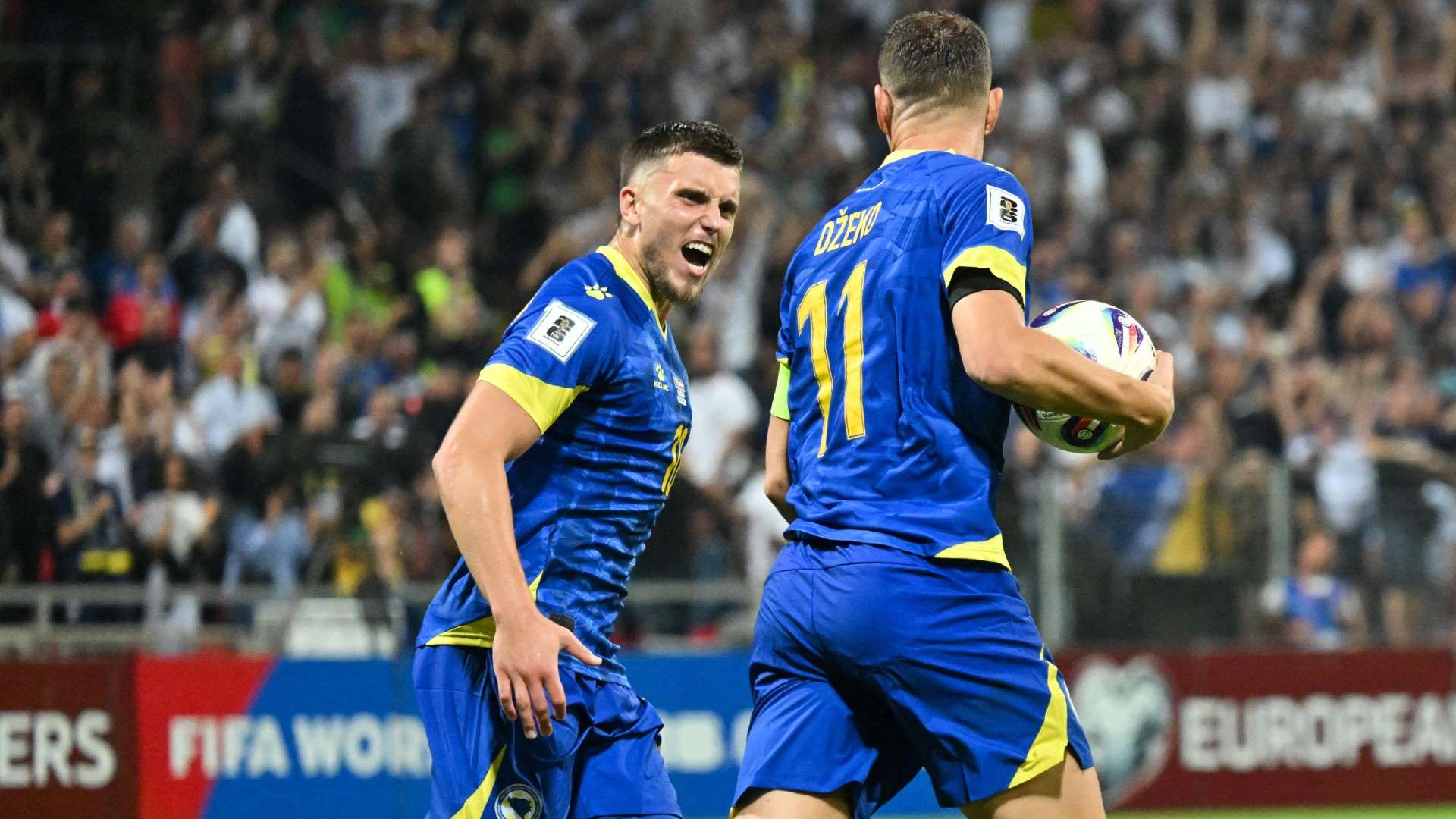
    The first 'group' is actually a solo: Edin Dzeko. Yet 'just' hardly applies. The star striker, with nearly 150 caps, provided the assist for the decisive 1-0 win in Lithuania in October 2013 that sealed Bosnia's first World Cup berth. He remains a figurehead and role model. "It's something special for an 18-year-old to meet Edin Dzeko for the first time; he was his idol and now they're sharing the dressing room," Barbarez told Transfermarkt, emphasising the striker's emotional value, and added to Sky: "Sometimes he can make a huge difference with just a few words. The lads listen to him. That's important."

    Fresh from helping Schalke 04 secure promotion to the Bundesliga, Dzeko remains a key figure on the pitch—provided his injury-prone body cooperates. A recent shoulder problem sidelined him during the club's decisive promotion run. "If he's 100 per cent fit, there's no need to ease him back in," Barbarez said recently. "We're lucky to have a match every six days; that gives plenty of time to recover, and modern science offers many ways to refresh tired players." He also lets his captain "have a say in what he wants and how long it takes," Barbarez adds.

    When fit, he is an automatic pick in Bosnia's attack; in seven regular qualifiers he scored five goals. In the play-off semi-final against Wales, his 86th-minute equaliser forced extra time; in the final against Italy, he teed up Haris Tabakovic's equaliser. Despite his advancing years, Dzeko remains indispensable to Bosnia.

  • ENJOYED THIS STORY?

    Add GOAL.com as a preferred source on Google to see more of our reporting

    Add as preferred source on Google
  • Bosnia and Herzegovina's forward #09 Ermedin Demirovic (L) celebratesGetty Images

    Bosnia and Herzegovina have qualified. As one observer put it, "It's like Germany winning the World Cup."

    The second group in Bosnia and Herzegovina's World Cup squad comprises "players in their thirties who lead the team", explains Barbarez. One of them is former Schalke defender Sead Kolasinac (32, Atalanta Bergamo), who, alongside Dzeko, is the second survivor from the 2014 squad. Goalkeeper Nikola Vasilj (30), who is departing 2. Bundesliga side FC St. Pauli after their relegation, also falls into this category and has been the undisputed number one since Barbarez took charge. Barbarez also persuaded former Hertha BSC defender Ivan Sunjic (29, Pafos FC)—who had made a single appearance for Croatia as recently as 2017—to switch allegiances and don the Bosnian shirt. The anchoring midfielder provided crucial stability and was instrumental in securing qualification.

    Stuttgart striker Ermedin Demirovic, who usually partners Dzeko up front, is another key member of this cohort. "It's as if Germany were to win the World Cup," the 28-year-old told Sport Bild about Bosnia and Herzegovina's World Cup qualification. "Lots of people come up to you and thank you for bringing a sense of joy to the country." Demirovic, born and raised in Hamburg, could have played for Germany but chose Bosnia as early as the U16 level.

    "I did it for my grandad. We always visited him on holiday; he was the proudest and told everyone I played for HSV. He has since passed away, but I am very happy to be going to the World Cup for him and the whole family, who suffered so much," Demirovic emphasised. "People suffered enormously during the war, and in some places they still have almost nothing. They're happy just to afford a cup of coffee each day. Then we come along and give them the World Cup. That makes it even more special," he added.

    The nation's history also shaped Barbarez's life. "I was more or less forced to flee, if you can put it that way," he told 11Freunde, recalling the winter of 1991/92. Shortly before the Bosnian War erupted, his father had sent the then 20-year-old from his hometown of Mostar to Hanover, ostensibly to visit his uncle Mujo. Although he longed to go home, the conflict forced him to stay in Germany; after impressing at a trial with Hannover 96, he built a career in the country.

    Via Hannover 96 and Union Berlin, he jumped to the Bundesliga with Hansa Rostock, where his form drew the attention of then Germany coach Berti Vogts, who floated the idea of naturalisation. "If I'd called Berti Vogts back then, I might have multiple World Cups and European Championships under my belt today. But I never considered it, because I always wanted to play for the country where I was born," explained Barbarez.

    Kerim Alajbegovic shares that conviction. The Cologne-born forward, who rose through the youth ranks at 1. FC Köln and Bayer Leverkusen, has represented Bosnia and Herzegovina since U15 level, and Barbarez guided the talented attacker into his senior debut last September.

    Alajbegovic now captains the third generation of Barbarez's World Cup squad, a group the coach is clearly proud of: "Lots of lads aged 19, 20, 21. We're almost the youngest team at this World Cup. I really like that," he stresses. Alajbegovic is only 18, yet his standout campaign for RB Salzburg has already attracted interest from several top European clubs. A strong World Cup could raise his profile further, and his bold displays in the qualifiers showed exactly what he can bring to Barbarez's side.

    Often introduced as a substitute, he repeatedly unsettled defences with his dribbling and creative flair. In November, during the crucial 3-1 win over Romania, Barbarez introduced Alajbegovic at the start of the second half with the score at 0-1, and the youngster helped Bosnia pile on pressure and ultimately turn the game around. In the play-off semi-final against Wales at the end of March, for example, Alajbegovic delivered the corner that Dzeko headed into the net to make it 1-1 shortly before the end of normal time.

  • Barbarez Alajbegovic Bosnia 2026Getty

    What can Bosnia and Herzegovina achieve at the World Cup? "Let's have a great summer."

    "He's absolutely brilliant. To have that kind of self-belief at 18 is incredible. Sometimes I'm almost afraid it's all a sham – but the lads really live it," enthuses Barbarez. Leverkusen have activated his buy-back clause, so Alajbegovic is returning to Bayer after a year in Salzburg. He is primed to become both a rising star on the biggest stage and one of the breakthrough players of the upcoming Bundesliga season. "I told him one thing: choose a club where you'll get minutes. That's important for us, but above all for his development. He's only 18; we joke that he can still play at the highest level for another 15 years," Barbarez stresses, underlining the youngster's main priority.

    Coach Barbarez also has Esmir Bajraktarevic, the 21-year-old PSV Eindhoven winger who scored the decisive penalty against Italy. Bajraktarevic shares Alajbegovic's cheeky, technically gifted style, and the pair could form a dangerous wide partnership for years to come. For Bajraktarevic, the World Cup is especially meaningful because he was born and raised in the USA. He turned professional with MLS club New England Revolution and, in early 2024, even made a senior international appearance for the United States.

    Because he had not yet reached 21 caps for the United States, a switch was possible, and within months Barbarez convinced Bajraktarevic to represent his family's homeland. That persuasion was unnecessary for centre-back Tarik Muharemovic, who grew up in Austria and had already represented Bosnia and Herzegovina at every youth level. Barbarez drafted the 23-year-old from Sassuolo into the senior squad in the summer of 2024, and he is now indispensable at the heart of defence. A multi-million-euro move could follow the World Cup, with Inter Milan reportedly leading the chase for his signature.

    What can Muharemovic and his teammates achieve in the tournament? With two stars from the 2014 generation—Dzeko and Kolasinac—still on board, Bosnia-Herzegovina can draw on experience from their sole previous appearance. In that campaign, they were drawn with Argentina, Nigeria and Iran, and fancied their chances of finishing second behind Lionel Messi's Argentina to reach the knockout stage. Their tournament began with a creditable 1-2 loss to the eventual runners-up, but the subsequent 0-1 defeat to Nigeria ended their hopes before the final group game, a 3-1 win over Iran that could not alter their fate.

    This time, with a bit more luck and, thanks to Dzeko and Kolasinac, a bit more tournament experience, things should go better. "The only thing I was missing was playing in a tournament. Now I'm here as a coach, and that makes me very proud," Barbarez emphasised. As in 2014, the group looks manageable on paper: Switzerland are the favourites to top Group B, with Qatar the clear underdogs – leaving a potential battle for second place between co-hosts Canada, who have home advantage, and Bosnia and Herzegovina.

    "It's hard to talk about results beforehand," says Barbarez, keeping his cards close to his chest when it comes to assessing his team's World Cup prospects. "But we can talk about emotions," he adds, staying true to his credo of prioritising feeling over everything else: "I've told our whole nation: let's have a wonderful summer. We'll carry your voice to America. Many will come to America, and we will hear them. I want to make people proud. I want to put a smile on their faces."

  • Bosnia and Herzegovina's 2026 World Cup squad


    GOAL

    Nikola Vasilj (FC St. Pauli), Martin Zlomislic (HNK Rijeka), Mladen Jurkas (FK Borac Banja Luka)

    DEFENCE

    Tarik Muharemovic (US Sassuolo), Nidal Celik (RC Lens), Sead Kolasinac (Atalanta Bergamo), Stjepan Radeljic (HNK Rijeka), Nikola Katic (FC Schalke 04), Nihad Mujakic (Gaziantep FK), Dennis Hadzikadunic (Sampdoria Genoa), Amar Dedic (Benfica Lisbon)

    MIDFIELD

    Amir Hadziahmetovic (Hull City), Benjamin Tahirovic (Brøndby Copenhagen), Ivan Sunjic (Pafos FC), Dzenis Burnic (Karlsruher SC), Armin Gigovic (Young Boys Bern), Ivan Basic (FC Astana), Amar Memic (Viktoria Plzeň), Ermin Mahmic (Slovan Liberec)

    FORWARDS

    Kerim Alajbegovic (RB Salzburg), Esmir Bajraktarevic (PSV Eindhoven), Ermedin Demirovic (VfB Stuttgart), Haris Tabakovic (Borussia Mönchengladbach), Jovo Lukic (Universitatea Cluj), Samed Bazdar (Jagiellonia Bialystok), Edin Dzeko (FC Schalke 04)