Are you 24 or older?

Help us verify your age by providing an honest response. This site contains gambling advertising for 24+.

Age-restricted content

You’re not old enough to view betting content. You’ll be redirected to the homepage.

alt
Greece golden generation GFX HIC 1-1GOAL

Christos Tzolis, Giannis Konstantelias, Konstantinos Karetsas & the making of Greece's new golden generation

Krishan Davis
  • It's now 22 long years since Greece's seismic triumph at Euro 2004 in Portugal, with more than a decade of mediocrity making that unprecedented achievement a distant memory. But after far too long in the international footballing wilderness, a nation is starting to believe again.

    It's early days, but a new generation is emerging to give their country genuine hope of ending an agonising 12-year exodus from major tournaments - one which stretched beyond the 2026 World Cup despite the expanded 48-team format.

    Greece have turned heads in their three opening UEFA Nations League matches, going unbeaten despite taking on international heavyweights Germany and the Netherlands. Now, expectation is at an all-time high, but this new wave looks capable of delivering tangible success.

  • International wilderness

    TOPSHOT-FBL-EURO-2024-PLAYOFF-GEO-GRC
    AFP

    Greece have not featured at a major tournament since the 2014 World Cup, most recently falling short in qualifying for Euro 2024 and the 2026 World Cup

    It's difficult to make the case that Greece have been chasing former glories in the 22 years since their unprecedented triumph at Euro 2004. In truth, they haven't come anywhere close to a repeat.

    After some mightily underwhelming performances in the late noughties and early 2010s, including the monumental failure to qualify for the 2006 World Cup and exiting Euro 2008 in the group stage as holders, the Greeks have not even featured at a major tournament since the 2014 World Cup in Brazil.

    The Ethniki seem to have been stuck in transition; they have run through eight permanent managers since the legendary Otto Rehhagel stepped down in 2010, the iconic generation that delivered European Championship glory eventually passed, and attempts to implement a different style of play following Fernando Santos' four-year tenure - one defined by defensive solidity - failed miserably.

    More recently, Greece came within a penalty shootout of reaching Euro 2024 but agonisingly fell to Georgia in a playoff, and even as a new generation of stars emerges, they did not fare any better in their attempts to secure a place at the 2026 World Cup across the USA, Canada and Mexico a year ago.

    A thumping win over Belarus to begin their qualifying campaign proved to be misleading, as defeats to Scotland and Denmark (twice) put them out of contention with two games still to play.

  • Systemic overhaul

    Greece
    Getty

    Fundamental changes behind the scenes, all the way down to grassroots level youth football, are starting to pay off for Greece and the HFF

    Behind the scenes, however, work has been done to change the national team's fortunes, and it seems that hard work could finally be about to pay dividends.

    The Hellenic Football Federation implemented a "radical" structural overhaul all the way down to grassroots level earlier this year, which has aptly been dubbed Anagennissi, or 'rebirth'. Albeit recent, this strategy has been developed over a number of years with the aim of producing more technically-gifted individuals.

    Announcing the scheme back in January, the HFF said in a statement: "The 'Rebirth' programme, tailored to the needs of the Greek reality, is a particularly ambitious initiative implemented by the HFF. It is based on the proper and systematic education of boys and girls from their very first steps in football and reflects the federation's strategic choice for a new era.

    "Alongside securing a modern training centre that will serve as the home of the national teams, the federation is now implementing, on solid foundations, a contemporary development and organisational programme from the grassroots level, involving club academies and regional association training centres.

    "Within the framework of the programme's holistic approach, the HFF has created a broad field of cooperation with regional coaches, who have already undertaken the task of transmitting the programme's principles to the regional football associations, in order to ensure the proper education of all those involved in changing the coaching process at grassroots level."

  • Pathway to progress

    FBL-EUR-C3-PAOK-YOUNG BOYS
    AFP

    Greece's biggest clubs have pivoted to developing their homegrown starlets, rather than signing players from elsewhere, and Giannis Konstantelias is among those to benefit

    Greece's biggest clubs have also played their part, giving many of this current generation a platform to shine in their home country, thereby accelerating their development and attracting lucrative financial packages from some of Europe's big hitters.

    "What's really helped is that Greek talents have actually started to be given an opportunity to make that progression from the youth sides, which have always had a good reputation in terms of the players they develop at Under-19 level," journalist, Greek football expert and host of the Hellas Footy podcast, Stephen Kountourou, tells GOAL.

    "But the biggest issue with Greece is that pathway from the Under-19s to the senior squad. That has changed in recent years in the Super League. PAOK from Thessaloniki are probably the biggest success story overall. They've produced the likes of Christos Tzolis and [Giannis] Konstantelias in recent years, both of whom have gone on to top-five league clubs.

    "Olympiacos' Under-19 squad won the UEFA Youth League in 2023-24, the same season that Olympiacos won the Conference League. The Under-23 squads, especially for the bigger clubs that have been developed for Super League 2, the second division, have helped somewhat as well, because that gives them a bit more senior experience and a bit more of a pathway."

    Kountourou continues: "There has been a real long-term plan for once from the Greek FA to really, really have a look at these players that are getting massively overlooked and that kind of fall away. We're finally developing players for the future. It was very much about the here and now, like 'which foreign players can we bring in now that will help our teams now?', rather than give a young Greek an opportunity.

    "And there's still a way to go with that, but the improvement is evident in how well our national team and individual players are performing and where they're going to as well. They're not just going to a smaller team in the top five leagues, or they're not just going to the Netherlands, or they're not just going to Portugal or Belgium. They are going to elite clubs now, and that's exciting."

  • Mastermind

    FBL-EUR-NATIONS-SRB-GRE
    AFP

    Head coach Ivan Jovanovic has been a key figure in ushering in this new generation, balancing the side with more experienced heads

    Head coach Ivan Jovanovic has been one of the driving forces behind the overhaul of Greek football since he took the job in 2024, adopting the principles of Anagennissi and choosing to give younger players more opportunities.

    "Once Ivan Jovanovic became manager, I think him and Makis Gagatsis, the president of the Greek Football Federation, had a plan in mind where the aim was to just get these players together and qualify for a major tournament," Kountourou says. "The intent was there because immediately upon Jovanovic becoming manager, then you started to see players like Karetsas get called up, Zafeiris get called up."

    Jovanovic and the HFF have also benefitted from casting their net further in terms of selection. "What's also really, really been positive for Greece is the players they've accumulated from the diaspora," Kountourou continues. "Konstantinos Karetsas was Belgian-born, but he chose to represent Greece instead of Belgium. Zafeiris grew up in Norway and he has since become Greek.

    "He started to introduce other diaspora players like Nektarios Triantis. And you saw that transition of Under-21 players who were performing well, like Charalampos Kostoulas, getting a look in. It's just since started to blossom from there."

    The 64-year-old Serbian has also helped to shift perceptions around the Greek national team, who had developed a reputation for being very defensive-minded during the noughties and 2010s. The current side looks far more adaptable. "There's a clear identity under Jovanovic where we still have that defensive solidity, but now they have the freedom and they have the ability to really go forward," Kountourou says.

    "Some of the passing movements, especially against Serbia most recently, were unbelievable. I've never witnessed the kind of brand of football that we were playing - some of the patterns we were playing to try to progress the ball up the pitch. And then they also showed against Germany that they're still capable of playing that really solid style of football where they clearly soaked up a lot of pressure against the team that, reputationally, are a massive footballing nation.

    "There's a bit of variety now with Jovanovic because I think the biggest criticism of him, especially over the World Cup qualifiers, was that there wasn't a plan B. Maybe he was still figuring things out because he was still very new to managing Greece, and the players were still new to playing under that pressure. Now we have a few different kind of tools to our belt.

    "We're not going to try and necessarily outplay teams, but we know that we're capable of matching them during periods of a game. I've never seen Greece have individual players that play at such a high level as we do now. And that's what's exciting."

  • Influx

    Christos Tzolis Arsenal 2026
    Getty Images

    There were a number of high-profile transfers involving Greek players this summer, most notably Christos Tzolis' switch to Arsenal from Club Brugge

    Those systemic changes back in Greece are undoubtedly a contributing factor to the fresh influx of their players that we've witnessed in Europe's top-five leagues in recent times, but it also simply comes down to pure talent, and this new generation is blessed with plenty of it.

    Just this summer, as many as six of the country's rising stars made relatively big-money and highly significant moves; Most notably, ex-Club Brugge winger Tzolis was snapped up by Arsenal for €40 million (£34m/$45m), and attackers Giannis Konstantelias and Konstantinos Karetsas both joined Borussia Dortmund from PAOK and Genk, respectively, for a combined €56m (£48m/$63m).

    Meanwhile, goalkeeper Konstantinos Tzolakis and midfielder Christos Mouzakitis both left Olympiacos for newly-promoted Hull City in the Premier League for a total of €28m (£24m/$31.5m), and centre-back Konstantinos Koulierakis swapped Wolfsburg for Roma in a €15m (£13m/$17m) deal.

    Brighton had already become something of a hub for Greek players, with highly-rated young strikers Stefanos Tzimas and Charalampos Kostoulas arriving on the south coast 12 months ago. Elsewhere in Europe, Vangelis Pavlidis has been plundering goals for Benfica for two years now and fellow No.9 Fotis Ioannidis has plied his trade for Lisbon rivals Sporting CP since the summer of 2025. Anastasios Douvikas - another striker - joined Como early last year and is now competing in the Champions League.

    All of this means Greece's best and brightest are competing at a much higher level on a regular basis, with many gaining European experience across the Conference League, Europa League and Champions League.

  • Leading lights

    FBL-GER-BUNDESLIGA-DORTMUND-HSV
    AFP

    Alongside Tzolis, Greece's most exciting emerging talents are Konstantelias and Konstantinos Karetsas, who both joined Borussia Dortmund in the summer

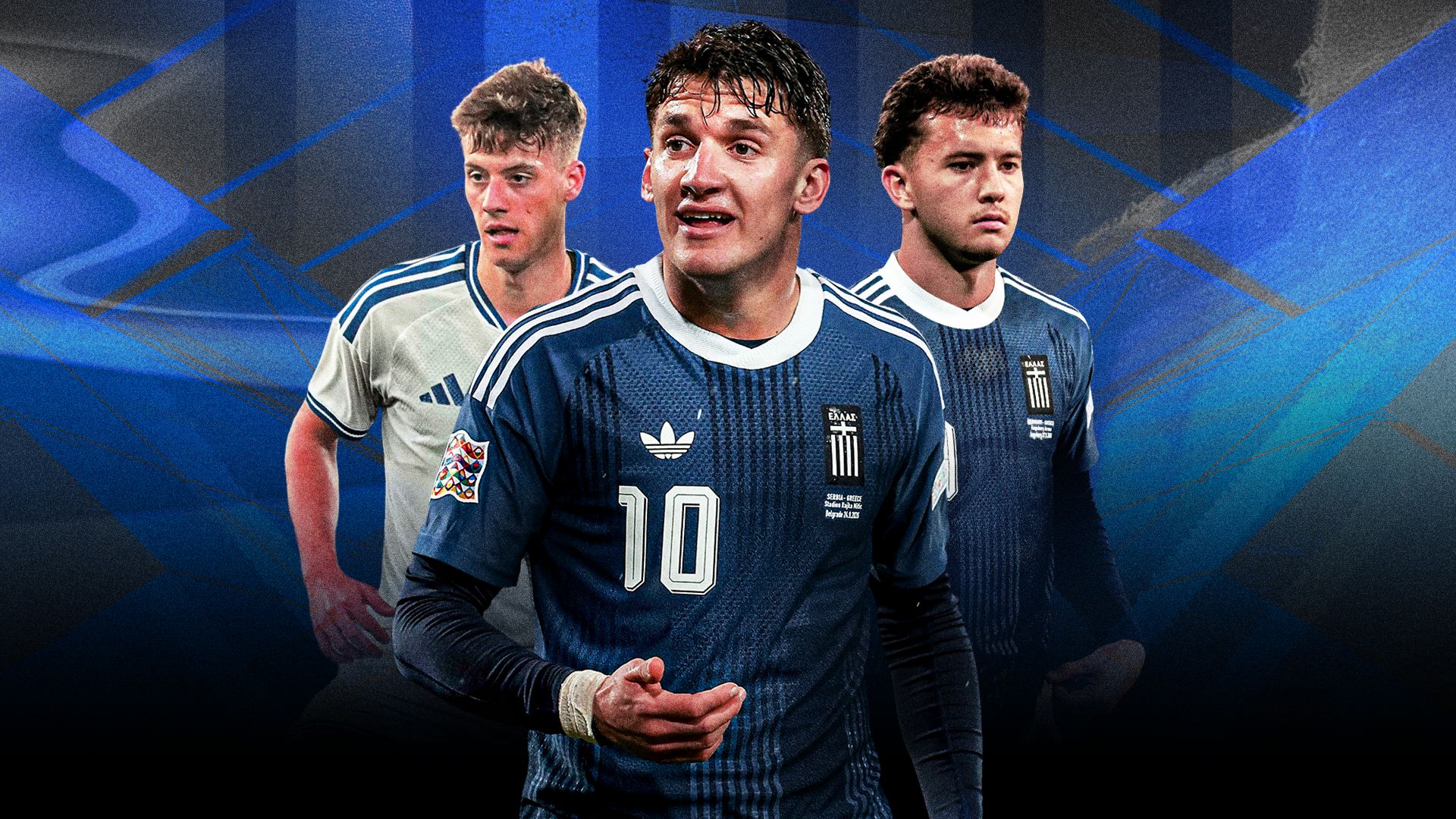
    Of the plethora of players who have taken a big step this summer, three of them are considered to be the great hopes of this exciting new generation of Greek talent: attackers Tzolis, Karetsas and Konstantelias, although the latter suffered a cruel ACL injury on the opening day of the season after scoring on his Bundesliga debut for Dortmund.

    All three possess the versatility to operate anywhere across the attacking line behind the striker, and seemingly boast the guile to unlock pretty much any defence. Tzolis, 24, has made a fast start in north London this season, demonstrating typical poise and vision to rack up four assists across all competitions already.

    Meanwhile, 18-year-old Karetsas - who is probably even more technically gifted - has caught the eye in an attacking midfield role for BVB, drifting menacingly between the lines and always probing for opportunities. He's already shown what he can do in a Greece shirt despite his tender years, scoring two sumptuous goals against Scotland last year in the Nations League and World Cup qualifying.

    "Christos Tzolis speaks for himself. He's one of the top players for Greece now," Kountourou says. "He's outstanding. And his career is fascinating because he was at Norwich very early on after he came through at PAOK. [It was] a little bit too soon for him to go to that kind of level, I think, and also not the right environment at a club that is a perennial sort of yo-yo team, or was at the time.

    "Now Arsenal picked him up and he's not scored for them yet, but he's got four assists in five games and he's only really had maybe one bad game against Aston Villa. So he's looking like he could really take that next step.

    "Konstantinos Karetsas - I've not seen a more naturally gifted footballer for Greece in a very long time. When you see players that can just do something, do something out of nothing, that's Karetsas. And his move to Dortmund is justified. Dortmund are one of the best clubs in the world for developing talent, to take them from that raw sort of stage to being ready to play at the elite level. And so I really believe that he's capable of doing that for Greece and for Dortmund. And he can move on to even bigger and better things after that.

    "Konstantelias as well, attacking midfielder. He was one of the best players in Greece for at least two or three years. He actually left PAOK later than I expected him to. And you can kind of get a gauge on the fans' feeling of him leaving because there were protests outside the ground when he got sold. But he's excellent. It's a shame that he got injured. I really hope that he comes back stronger."

    He adds: "We've never had an attacking three like that before. I mean, in terms of Konstantelias' style of play, he's an attacking midfielder obviously, really great passer of the ball, can take a really lovely shot as well. He's very naturally gifted.

    "So he's quite a versatile player. He's also two-footed, so he's really flexible on the ball. He was already the best player in the league pretty much after Tzolis left, and he was early 20s, late teens. And that says a lot, maybe not about the standard of the league, but about his talent. So to be one of the top players immediately and not even be 21 at the time, it says a lot about him.

    "And Dortmund is an excellent level for him to play. It's just such a shame that he sustained that injury, because I think he'd definitely be in the national team now, and he would definitely be starring for Borussia Dortmund."
  • Supporting cast

    FBL-EUR-NATIONS-SRB-GRE
    AFP

    Charalampos Kostoulas has made a flying start to the season with Brighton and will form a key part of the Greek attack going forward

    However, it's not just the attacking talent that suggests that this isn't a false dawn for Greece; their new-found strength in depth and balanced blend of youth and experience means this new wave should have serious staying power at the highest level of international football.

    The team now has a solid spine from which they can build around; Tzolakis, 23, has been a revelation between the sticks with Hull in the Premier League, but he had been shining for some time at Olympiacos, both in the Super League and in Europe. They are actually spoiled in the goalkeeping department, with Lazio's Christos Mandas and seasoned campaigner Odysseas Vlachodimos both solid stoppers, too.

    In defence, Konstantinos Mavropanos of West Ham has been a reliable presence, and he is usually partnered by either Olympiacos captain Panagiotis Retsos or the aforementioned Koulierakis, another PAOK academy graduate for whom there are very high hopes, while Liverpool's Kostas Tsimikas remains a solid and experienced option at left-back.

    In midfield, there are very high hopes for Mouzakitis, 19, who somewhat surprisingly followed Tzolakis to Hull this summer. A wonderfully composed ball-playing midfielder, he is also adept at snapping into tackles and breaking up opposition attacks. Once he has settled and adapted, he should shine in English football. In the long-term, he may well play alongside 23-year-old Christos Zafeiris, a more attack-minded, technical operator who joined PAOK in January. Nectarios Triantis, who plies his trade for Minnesota United in MLS, is another young midfielder with plenty of potential.

    As we've mentioned, Greece are also blessed with a raft of capable goal-scorers at the top end of the pitch, namely Pavlidis, Kostoulas, Douvikas and Ioannidis, while Tzimas will be in the frame for a senior bow once he has recovered from his own ACL injury. Panathinaikos' Andreas Tetteh, meanwhile, broke into the squad last year, becoming just the second black player in Greece's history.

    Given that plethora of options up top, Jovanovic's preferred fluid 4-4-2 shape does, at least, mean there is room for a strike partnership, with Brighton's Kostoulas well suited to playing just behind an out-and-out No.9 like Pavlidis. The 19-year-old has made a flying start to the season for the Seagulls, racking up seven attacking contributions in eight appearances in all competitions, including a goal and assist in the stunning victory over champions Arsenal before the international break.

  • Starting to click

    Germany v Greece - UEFA Nations League 2026/27 Group A2 MD2
    Getty Images Sport

    Greece made a flying start to their UEFA Nations League campaign with back-to-back victories and a draw, including a historic first-ever win over Germany

    Despite the talent at their disposal, expectations will be somewhat tempered, with Greece's failure to qualify for the World Cup still fresh in the memory and their friendlies in the March and June international breaks equally discouraging; the Ethniki lost to Paraguay, drew with Hungary and fell to Italy, although they did pick up a creditable draw with Sweden.

    However, autumn and the UEFA Nations League have seemingly brought renewed focus and some seriously eye-catching results for this new crop of Greek talent. Having been promoted to the top tier of the competition last year, they have sprung a real surprise in a tough group comprising Germany, the Netherlands and Serbia.

    In their opening game, Greece showed their mettle to come from a goal down and snatch a victory over the Serbs on the road in the notoriously hostile surroundings of Belgrade's Rajko Mitic Stadium. New Arsenal man Tzolis equalised with an angled low drive, before Como's Douvikas headed a dramatic winner in the fifth minute of added time.

    While the nature of that win was euphoric, it was on their second matchday that people really sat up and took notice as Jovanovic's side secured a historic first-ever victory over Germany, once again away from home as they ruined Jurgen Klopp's home bow. Dimitrios Kourbelis - one of the more experienced heads in the group - netted a deflected strike 15 minutes from time which proved to be the difference, ensuring the Greeks had gotten off to an absolute flyer in Group B.

    Remarkably, they ensured they made an unbeaten start to their campaign in the face of a very tough fixture list by playing out a thrilling 2-2 draw with the Netherlands on matchday three. The Ethniki actually led 2-0 at the break courtesy of goals from Ioannidis and Giorgios Masouras, but the Dutch mounted a second-half fightback and snatched a point in the 89th minute through Tijjani Reijnders.

    Despite that late disappointment, this young squad has still made a big statement, and if they can avoid defeat in the return clash with Germany on Sunday, their rivals will know to take them very seriously.

  • No excuses

    FBL-EUR-NATIONS LEAGUE-GREECE-NETHERLANDS
    AFP

    Amid all the hype, qualifying for a major tournament in the form of Euro 2028 has been deemed the minimum requirement for this group of players

    However, all the hype and expectation will count for very little if this squad does not make good on its obvious potential and show up when it really, really matters. After a 12-year absence from the biggest stage, qualifying for Euro 2028 in the UK has been deemed a non-negotiable.

    "The real test is qualifying for a major tournament, the Euros or the World Cup," Kountourou tells GOAL. "And 2028 has been earmarked by the Greek FA and by Ivan Jovanovic as a must-qualify."

    Asked what the minimum target is going forward, the answer is crystal clear: "Qualify. Qualify for the Euros because this team is good enough now. There's less and less justification for them not to qualify for a major tournament, especially with the players that we have, with the manager that we have, who is the best manager we've had since Fernando Santos.

    "And then from there, the sky's the limit. The World Cup's after that, but the focus has to be 2028."

    However, Kountourou believes Greece will also have to overcome the mental hurdle of having fallen short in qualifying so many times since the 2014 World Cup, including just last year when the squad was much the same.

    "We need that watershed moment now because it's all fair and good performing in the Nations League. There will be pressures in the Nations League to an extent, but not like actually reaching a major tournament. And that's something that the fans want more than anything."